
Almaty Bars
EN

Almaty Bars

About the project

The city begins with our decisions.

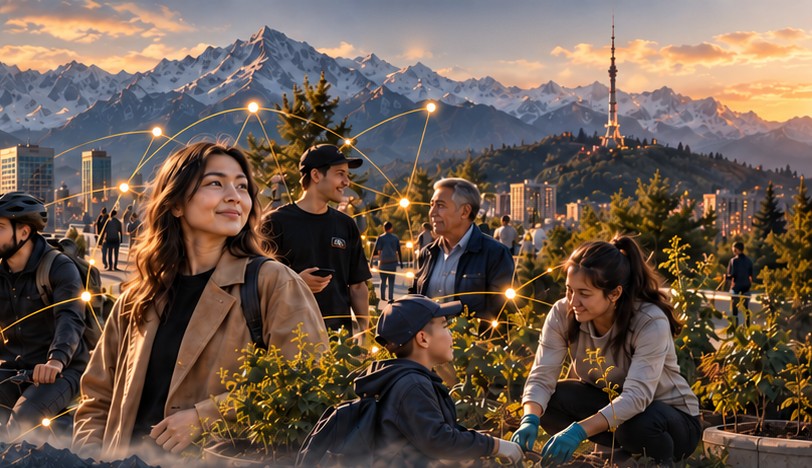
Almaty is known for its mountains. But city culture is made by people. Every day we affect one another — on the roads, in courtyards, on the streets.

Almaty Bars helps find sensible solutions, check facts and turn useful ideas into shared practice.

Self-regulation · Responsibility · Trust

The project

What the project is about

Almaty Bars is not just a website and not merch. It is a city initiative built around one idea: much of city life depends on what each of us does.

We talk about roads, safety, ecology, the urban environment and how people treat one another. We examine real situations, check facts and show practical examples.

We rely not only on prohibitions, but on personal responsibility, agreements and self-regulation.

Three pillars

Everything we do rests on these principles.

  • Self-regulation

    Sensible practices are born among people themselves.

  • Responsibility

    We take into account how our decisions affect others.

  • Trust

    Words must be backed by facts and actions.

Manifesto

A large city cannot be described by laws and instructions alone.

Thousands of everyday situations remain between formal rules: how to give way, warn someone, change lanes, avoid unnecessary conflict, or help each other move through a situation where no separate law can be written for every individual case.

Many solutions emerge naturally.

People try different approaches, discuss them and share experience. Some practices take root because they genuinely make interaction easier. Others disappear or change over time.

Almaty Bars helps make this experience visible and understandable.

We collect examples, consult experts, compare different points of view, preserve materials and explain the context.

We do not set rules for society.
We do not decide how people should live.
We do not replace the law.

We create a tool that helps people see different ways of interacting, understand why they exist and make their own choices.

Three Pillars

  • Self-regulation

    Not every urban situation needs a separate prohibition or instruction.

    People can discuss practices, try them in real life, and keep those that genuinely make interaction easier.

  • Responsibility

    A workable solution considers not only one’s own interests, but also the consequences for other people involved.

  • Trust

    Trust grows where information can be verified, agreements are clear, and words are backed by actions.

Almaty is a city of people with very different backgrounds and experiences.

Some were born here. Some arrived yesterday. Some have lived here for many years.

For Almaty Bars, this is not a criterion for judging a person.

Urban culture is not determined by registration or place of birth.

It develops through repeated interaction between people.

An “Almaty Bars” is not a membership card or a title granted by someone.

It is an image associated with the project and the city.

Each person decides for themselves what that image means to them.

Ethics

  • Review is not punishment

    A person's mistake does not automatically make them a bad person. The purpose of reviewing a situation is to understand what happened and find a more workable way to interact, not to harass or shame someone.

  • The law takes priority over informal agreements

    No urban practice, Code or Manifesto overrides the law.

  • Experts can be wrong

    Expert opinion matters, but it remains the opinion of a specialist. When specialists disagree, those differences should be presented honestly.

  • Practices can change

    A practice that has worked in the city for a long time does not have to remain unchanged forever. Changing conditions may lead to a more workable solution.

  • The Sign is not an award

    Almaty Bars does not grant people the right to wear or use the Sign, and does not revoke such a right. The Sign itself does not certify a person's behavior.

  • There are no sanctions imposed by the project

    At the current stage, Almaty Bars:

    • does not issue warnings;
    • does not impose punishments;
    • does not restrict participation;
    • does not revoke status;
    • does not maintain a list of “proper” and “improper” Bars.

    If a formally organized community emerges in the future, its participation rules and procedures will be defined separately and publicly.

Code

The Almaty Bars Code is not a condition of membership and not an obligation to an organization. It is a set of principles for personal self-reflection for people who find the idea of the project meaningful.

  • 01

    Understand the situation first

    Do not reach a conclusion simply because someone acts in an unfamiliar way. Try to understand the reason first.

  • 02

    Do not create unnecessary conflict

    If a problem can be solved more calmly and simply, do not increase tension without a reason.

  • 03

    Consider the other participants

    A convenient solution is not one that is convenient for only one person.

  • 04

    Distinguish rules from informal agreements

    The law remains the law. An informal practice remains a practice. One should not be presented as the other.

  • 05

    Check information

    Distinguish between facts, expert opinion, personal experience and assumptions.

  • 06

    Allow practices to be reconsidered

    If a more convenient and better-supported solution appears, an existing practice may change.

  • 07

    Do not use the Sign as proof of superiority

    The symbol itself proves nothing. Having or using it does not make a person better than others and grants no special rights.

Contact